
Most of us take listening for granted. But listening and hearing are not the same thing. A child can pass a standard hearing test with flying colours and still struggle to process what they hear in any meaningful way. They might find noisy environments overwhelming. They might mishear words, lose track of conversations, or find it truly exhausting just to follow what someone is saying to them.
The Tomatis® method was developed specifically to address this gap, the space between what the ear physically detects and what the brain actually does with it. It is a form of auditory stimulation therapy with over 70 years of clinical development behind it, and it is one of the two core approaches I offer at Think Thrive.
The Story Behind the Method
Dr Alfred Tomatis was a French ear, nose, and throat specialist who began his clinical work in the 1940s. He noticed something unexpected in his patients: professional singers who had lost the ability to produce certain frequencies in their voice had also lost the ability to hear those same frequencies. The connection between listening and voice led him to a broader question about the relationship between the ear and the brain.
Over decades of research and clinical practice, Tomatis developed the understanding that the ear does far more than process sound. It plays a central role in regulating the nervous system, supporting posture and balance, and powering the brain's ability to focus and organise incoming information. His work eventually led to the development of the Electronic Ear, a device that uses electronically filtered and modulated sound to stimulate the auditory system in a targeted way.
Today, the Tomatis® method is practised by trained practitioners in over 50 countries. I hold a Tomatis® Level 2 qualification, and Think Thrive is the only practice in West Yorkshire offering both the Tomatis® method and INPP primitive reflex integration.
Hearing Versus Listening: Why the Difference Matters
A standard hearing test checks whether the ear can detect sound at various frequencies and volumes. It is an important check, and if you have not had one done, it is always a sensible starting point. But it tells us relatively little about how the brain processes and uses the information it receives.
Listening is a neurological skill. It involves the brain's ability to filter sound, to focus on a voice against background noise, to hold a sequence of sounds in order long enough to make sense of them, to connect what is heard with language and meaning. These are learnable, trainable processes, and when they are disrupted, the effects reach well beyond what we might think of as a hearing problem.
Poor listening is often misread as inattention, behaviour, or simply not trying. Children who find auditory processing difficult are frequently described as daydreamers, as struggling to follow instructions, or as needing things repeated several times. These patterns can look like many other things before anyone thinks to look at listening.
The Tomatis® Listening Test
Before any Tomatis® programme begins at Think Thrive, we carry out a Tomatis® Listening Test. This is not a hearing test. It is a detailed profile of how the auditory system is processing sound across a range of frequencies and listening conditions.
The test typically takes between 45 minutes and an hour. The child listens through headphones and responds to sounds presented in various ways, including through air conduction and bone conduction. The results are plotted on a listening curve that reveals patterns in how the ear and brain are working together.
What we are looking for includes how the ear responds to different frequencies, whether there is a difference in processing between the right and left ear, how listening changes under different conditions, and whether there are signs of auditory fatigue, meaning the ear's ability to sustain focused listening over time.
The Listening Test results shape the entire programme that follows. There is no standard protocol. Everything is built around the individual profile.
How the Therapy Works
Tomatis® sessions are delivered using specialist equipment: at Think Thrive, this is the Maestro device, which plays specially prepared music through Infinite headphones. The headphones have both air conduction speakers and a bone conduction speaker built into the headband, which allows sound to reach the auditory system through two pathways simultaneously.
The music used in Tomatis® sessions is primarily classical, with Mozart and Gregorian chant being central to the original programme. This is not incidental. The acoustic properties of these recordings, including the richness of the frequency range and the particular rhythmic qualities, are well suited to the kind of stimulation the method requires.
The Maestro applies a process called gating, which alternates the sound between filtered and unfiltered states at carefully timed intervals. This creates a kind of auditory workout. The ear's stapedius muscle, a tiny muscle in the middle ear involved in sound transmission, is repeatedly engaged and relaxed. Over time, this training supports the ear's ability to tune in more efficiently and to sustain that focus.
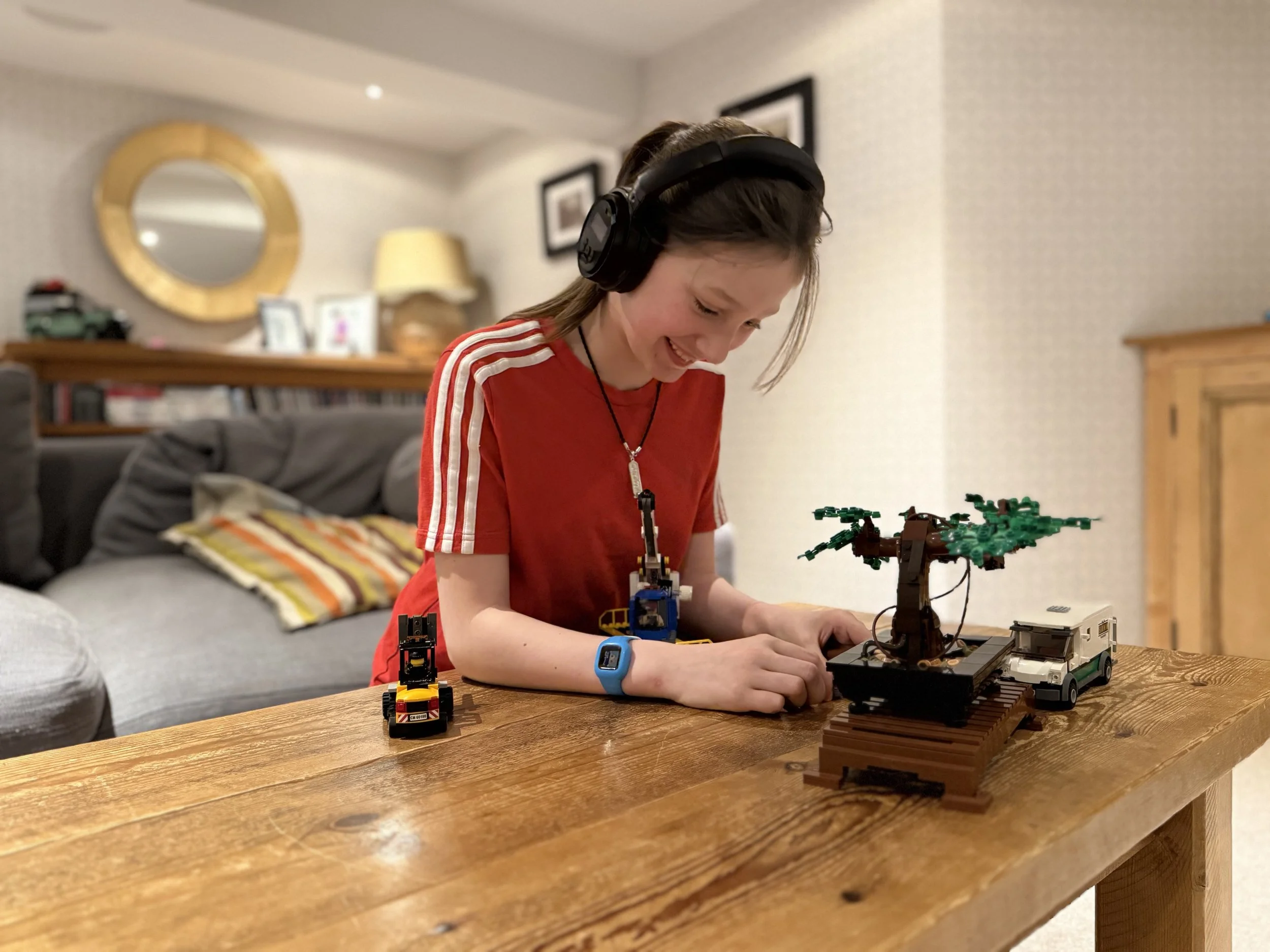
Sessions are passive. The child listens while drawing, doing a puzzle, or simply resting. There is no instruction or interaction required during the listening itself, which makes it accessible even for children who find other kinds of therapy demanding.
Who Might Benefit from Tomatis® Therapy?
The Tomatis® method has been used with a wide range of children and adults over many decades. At Think Thrive, the children who tend to benefit most include those who are experiencing some of the following:
Signs that Tomatis® therapy may be worth exploring
Auditory processing difficulties
Mishearing words or phrases, difficulty following spoken instructions, losing track in conversation, needing things repeated, or finding it hard to separate a voice from background noise.
Attention and focus
Difficulty sustaining concentration, easily distracted, mind wandering during lessons or conversations, inconsistent performance depending on the environment.
Language and speech
Speech sound difficulties, word retrieval challenges, slow language development, or a gap between how much a child seems to understand and how much they can express.
Sensory sensitivities
Covering ears in noisy environments, distress at unexpected sounds, difficulty with loud settings such as the school hall, assemblies, or busy restaurants.
Emotional regulation and anxiety
A nervous system that is easily overwhelmed, heightened anxiety in social or busy environments, difficulty settling or self-regulating.
Posture and coordination
The ear's vestibular function is involved in balance and body awareness. Some children with postural or coordination difficulties show improvements through auditory stimulation work.
It is also worth noting that Tomatis® therapy is not exclusively for children with identified difficulties. It has been used to support concentration, performance, and wellbeing in people of all ages and backgrounds. Many adults find it valuable for managing stress, improving focus, and supporting their own sense of calm.
What a Tomatis® Programme at Think Thrive Looks Like
Following the Listening Test, we discuss the results together and I explain what the profile is showing. From there, a programme is designed around your child's specific needs. Programmes are typically delivered in blocks of intensive listening sessions, often referred to as intensives, with rest periods in between to allow the nervous system to integrate what it has experienced.
Sessions take place in the Think Thrive therapy space in Honley, Holmfirth. Your child will listen through the Maestro headset for a set period during each session, usually between 30 and 60 minutes depending on age and the stage of the programme. Most children find the sessions calm and easy to manage, and many actively enjoy the listening time.
Progress is reviewed between intensives, and the programme adjusted as needed. The aim is always to work towards change that is sustainable and that the child's nervous system can hold onto, rather than creating dependency on ongoing sessions.
Tomatis® Alongside INPP
At Think Thrive, Tomatis® therapy and INPP reflex integration are the two central approaches I offer. They work well alongside each other because they address different but related aspects of neurodevelopment. INPP work targets the body's movement-based reflexes and the neurological pathways established through early motor development. Tomatis® targets the auditory system and its connections to the nervous system, attention, and language.
For many children, both are relevant. A child whose nervous system is dysregulated may benefit from reflex integration to address the underlying movement patterns and from Tomatis® to support the auditory processing and sensory tolerance that affects their daily experience. Having both available under one roof, and being able to design an integrated programme, is quite unusual. It is one of the things that makes Think Thrive different.
If you are wondering whether Tomatis® therapy might be relevant for your child, please do get in touch. I am always happy to have a conversation before anything is booked, and there is never any pressure to proceed before you feel ready.