
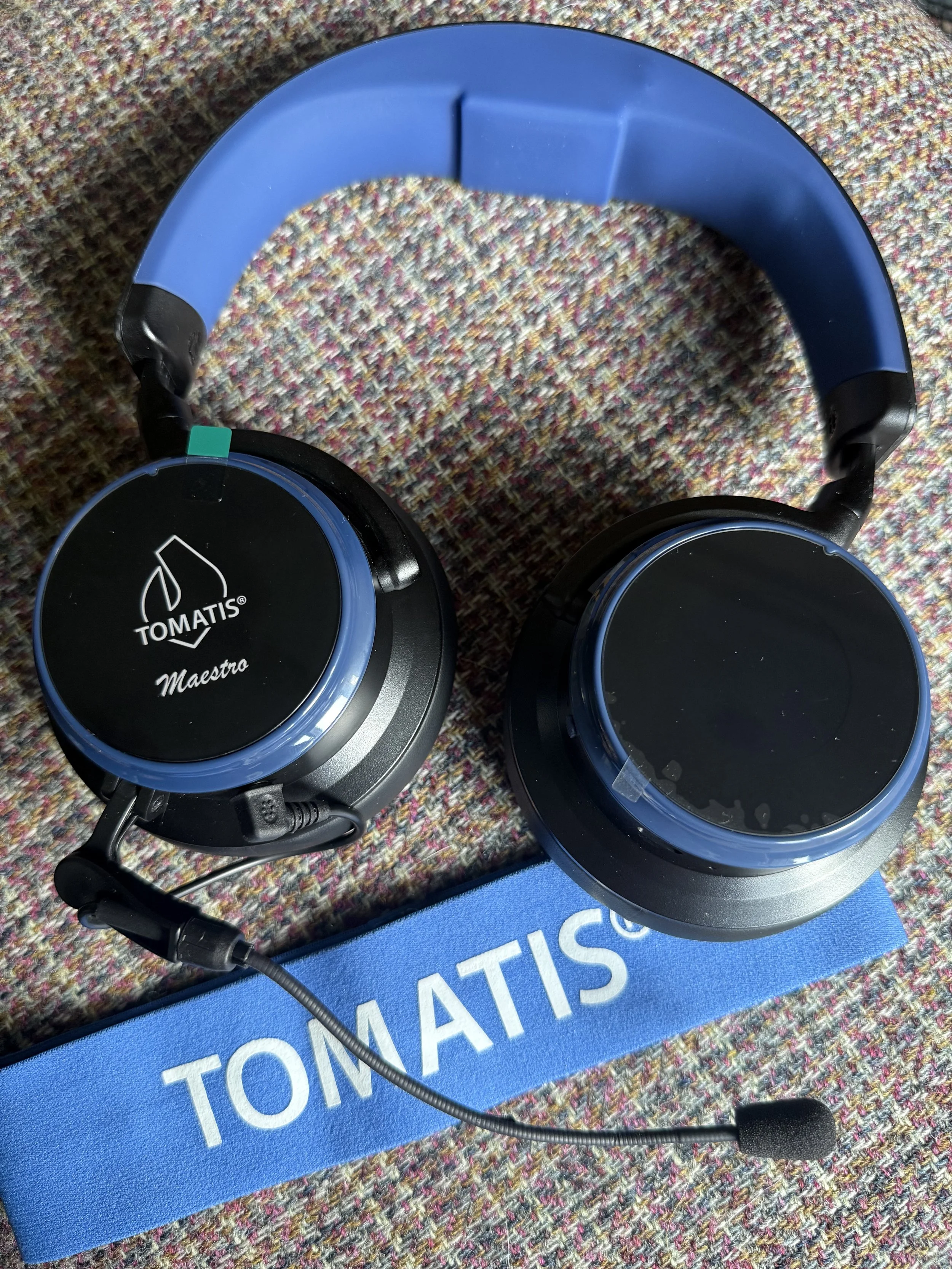
When parents first hear about the Tomatis® Listening Test, they often assume it is a standard hearing test. In one sense, it is: it measures how the ears respond to sound across a range of frequencies. But what it actually maps is something more nuanced than whether your child can hear. It maps how your child listens.
Hearing and listening are not the same thing. Hearing is the passive detection of sound. Listening is what the brain does with it: the active, selective, often effortful process of attending to, filtering, and making meaning from what we hear. The Tomatis® Listening Test gives us a detailed picture of how efficiently and comfortably that process is working for your child.
Before the test: the conversation that matters
The assessment begins before any equipment is switched on. I spend time with you going through your child's developmental history in some detail. This covers everything from pregnancy and birth through to how your child is managing at school right now: speech and language milestones, sleep patterns, sensitivity to sound or touch, attention and focus, emotional regulation, and any diagnoses or assessments already in place.
This is not background noise. The history shapes how I interpret the Listening Test results and whether a Tomatis programme is appropriate, and if so, what form it should take. It also helps me understand what you are hoping for, and what realistic expectations look like for your family.
The Listening Test itself
The test is conducted using specialist equipment and is completely non-invasive. Your child wears headphones and listens to a series of tones across a range of frequencies. They respond to what they hear, and the results are recorded and processed into a listening curve.
We test both air conduction and bone conduction. Air conduction is the familiar route: sound travels through the ear canal to the eardrum and into the inner ear. Bone conduction bypasses that pathway entirely, carrying sound vibrations directly through the bones of the skull to the cochlea. The relationship between these two channels tells us something important about how the ear and the brain are coordinating.
We also test each ear separately. In the Tomatis® method, the relationship between the right and left ear is significant. The right ear has a more direct neural pathway to the left hemisphere of the brain, which is the primary centre for language processing. When the right ear is the leading ear, that pathway is efficient. When the left ear dominates, or when the two ears are working at odds, listening can require considerably more effort than it should.
The Listening Test does not tell us whether your child can hear. It tells us how much work their nervous system is doing just to listen.
What the results show
The listening curve produced by the test reveals several things at once. We look at selectivity: the ear's ability to distinguish between different frequencies, particularly in the higher ranges where speech clarity lives. We look at the overall energy of the listening system. We look at how the two ears compare, and whether bone conduction is supporting or conflicting with air conduction.
In practice, the patterns we see often align closely with what parents and teachers have already observed. A child who struggles to follow verbal instructions in a noisy classroom, or who mishears frequently, or who seems to switch off during reading, often shows a listening curve that explains exactly why. The test gives a name and a shape to something that has previously only been described as a behaviour.
It is worth being clear about what the Listening Test is not. It is not a diagnostic tool and it does not produce a medical diagnosis. It is a functional assessment: a map of how the listening system is currently performing, and a guide to what kind of support is likely to help.
After the test: what happens next
Once I have reviewed the results, I talk them through with you in plain language. I explain what the curve is showing, how it connects to what you have described at home and school, and whether I think a Tomatis programme would be a useful next step for your child.
Not every child who comes for a Listening Test will go on to a full programme, and that is fine. Sometimes the results indicate that a different kind of support would be more appropriate, and I will say so. If a programme is recommended, I explain the structure, the commitment involved, and what families typically notice over the course of treatment.
The Tomatis programme at Think Thrive uses the Maestro headset with Maestro headphones, delivering a preset programme structure that has been calibrated to the individual child's profile. Sessions take place at the practice in the Holme Valley. The programme involves an intensive phase followed by consolidation periods, and for most children it runs over several months. Progress is reviewed at each stage.
Is my child the right age?
The Tomatis® Listening Test can be carried out with children from around three years old, and the method is used with people across the lifespan, including adults. The assessment works best when a child is able to cooperate with the task, though the process is designed to be accessible and calm. For very young children or those with significant attention difficulties, we discuss the best way to approach the session beforehand so that it is as comfortable as possible.
If you are unsure whether your child is ready, or whether the assessment is the right starting point, an initial conversation is always welcome before you book. There is no pressure and no obligation, and it is often the most useful thing we can do first.
Book a Tomatis® Listening Test
The Tomatis® Listening Test is available at Think Thrive in the Holme Valley, West Yorkshire. Rebecca is a Tomatis Level 2 Practitioner and the only practitioner in West Yorkshire offering both Tomatis and INPP neurodevelopmental therapy.
Get in touch